Keep the platform local-first
A self-hosted lab makes the data flow and service boundaries easier to inspect while avoiding a premature claim of production readiness.
ENGINEERING PROJECT / 01
A local-first security operations platform for collecting telemetry, investigating alerts, enriching indicators and governing response actions.
01 / CONTEXT
THE WHYSecurity investigations often require analysts to move between disconnected tools, normalize inconsistent events and preserve a trustworthy record of decisions. AegisSOC explores how those workflows can be brought together in a controlled, self-hosted environment.
02 / SYSTEM DESIGN
THE STRUCTUREA high-level view of the documented workflow and component boundaries.
Wazuh alerts and authenticated event producers submit source-aware security events.
Normalizes ingestion, serves analyst workflows and enforces workspace-aware access.
Stores events, investigations, cases, integration state and audit history with row-level security.
Run scheduled detections, retention, provider synchronization and approved response delivery.
MISP and OpenCTI enrich indicators; a configured receiver handles approved response requests.
03 / ENGINEERING LOG
THE BUILD SEQUENCEA transparent sequence of engineering milestones. Status labels describe documented work—not a live completion percentage.
Established a local-first SOC workflow with explicit limits for detection content, scanner imports and receiver-based response.
Structured the platform around FastAPI, PostgreSQL, Alembic and Docker Compose, with separate workers for scheduled and integration tasks.
Added workspace membership checks, PostgreSQL row-level security, a restricted runtime database role, approval gates, signed webhook delivery and audit history.
Built source-aware event ingestion, replay protection, MISP and OpenCTI enrichment, plus imports for external vulnerability-scan findings.
The existing gallery is from an earlier lab build. Capture fresh screenshots from the current local build before presenting them as current release evidence.
04 / DESIGN JUDGMENT
TRADE-OFFS & REASONSThe engineering choices that shape the system—and the reason each boundary exists.
A self-hosted lab makes the data flow and service boundaries easier to inspect while avoiding a premature claim of production readiness.
Workspace membership checks and PostgreSQL row-level security provide layered enforcement; hiding a control in the interface is not an access-control boundary.
Signed, idempotent receiver-based webhooks create an auditable hand-off without giving the platform arbitrary endpoint command execution.
Normalizing Nessus, Tenable and Qualys exports keeps the integration honest: AegisSOC consumes findings but does not launch scans.
06 / IMPLEMENTATION
THE HOWThe work is broken into practical building blocks, from initial design through to validation.
Ingests and normalizes security events with replay protection and source-aware handling.
Provides investigation and search workflows backed by PostgreSQL and workspace-level access controls.
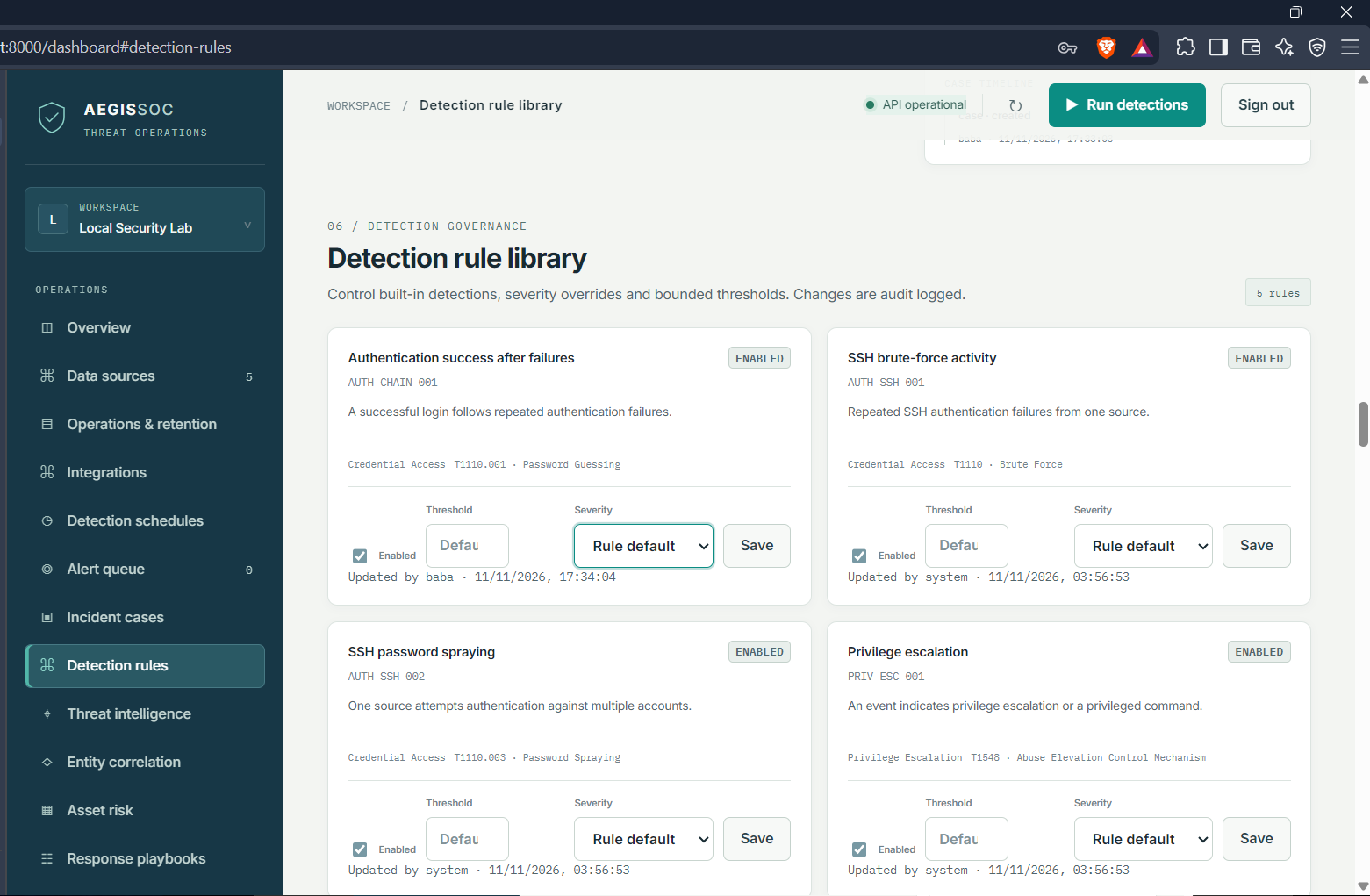
Uses deterministic detection rules and a documented, bounded Sigma subset.
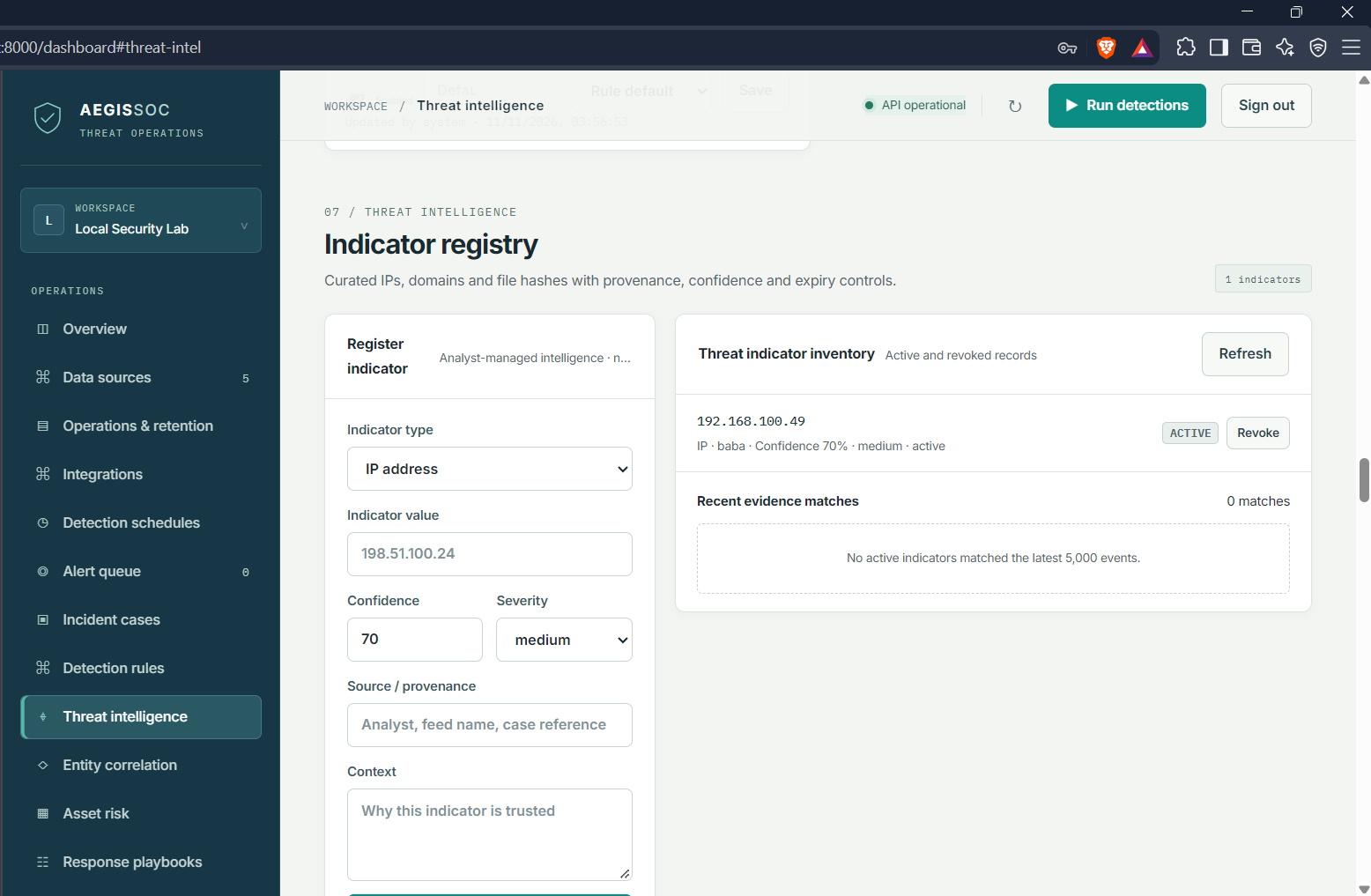
Enriches investigations with IOC intelligence through MISP and OpenCTI integrations.
Imports asset-risk findings from Nessus, Tenable and Qualys exports.
Routes response requests through approvals, signed webhook delivery, idempotency and audit history.
07 / VERIFICATION
THE CHECKSSpecific checks documented for this project. Results are scoped to the recorded lab or test run.
Workspace membership checks are combined with PostgreSQL row-level security and a restricted runtime database role.
Canonical event ingestion includes source-aware normalization and replay protection.
Requests are approved, delivered through signed webhooks and tracked with idempotency and audit history.
08 / RESULTS
THE VALUEA modular FastAPI and PostgreSQL application with dedicated workers for scheduled jobs, retention, integrations and response.
Security boundaries that include workspace membership checks, PostgreSQL row-level security and a non-owner runtime database role.
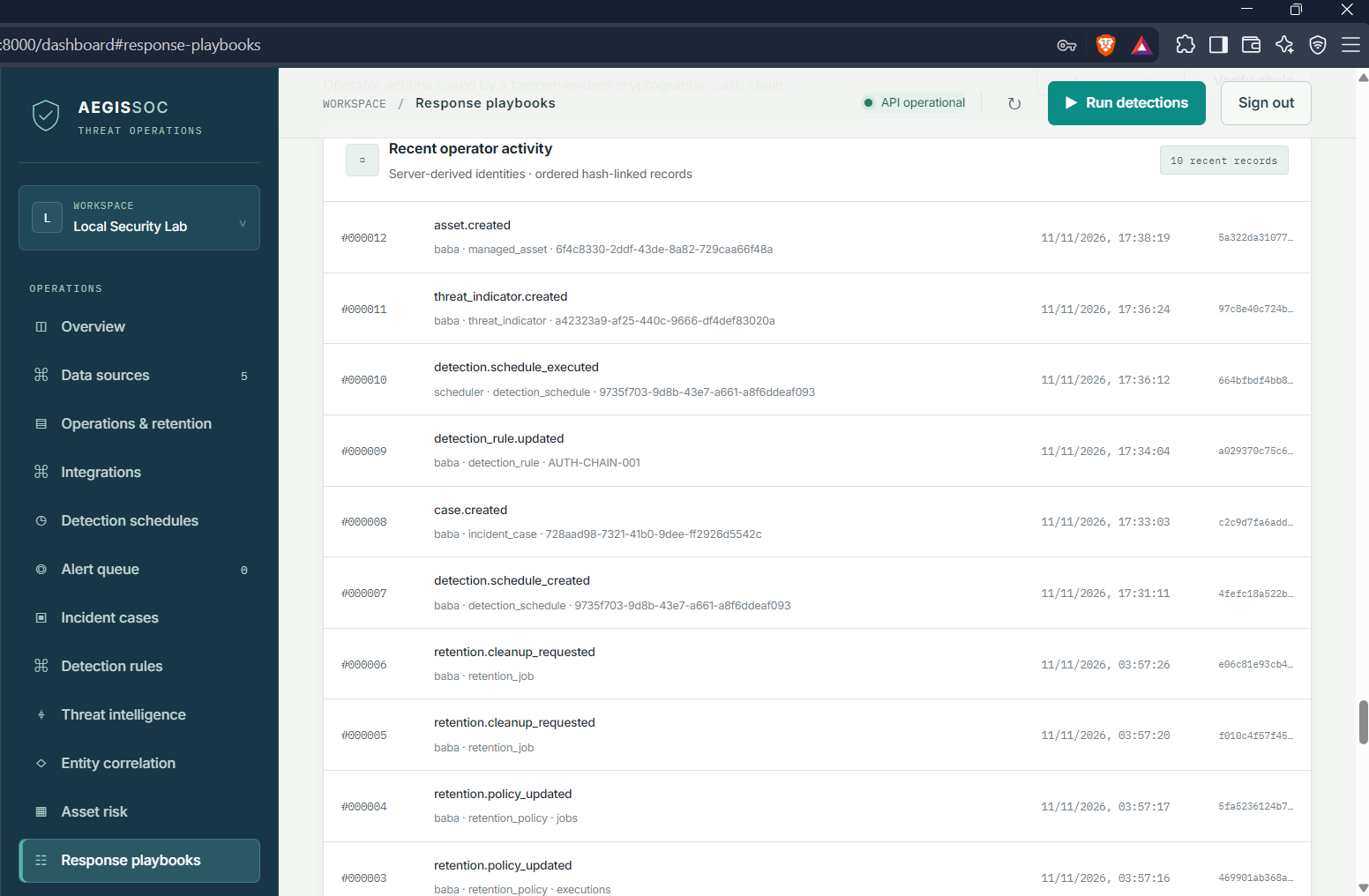
An auditable response workflow that makes approval and delivery state explicit.
09 / EVIDENCE
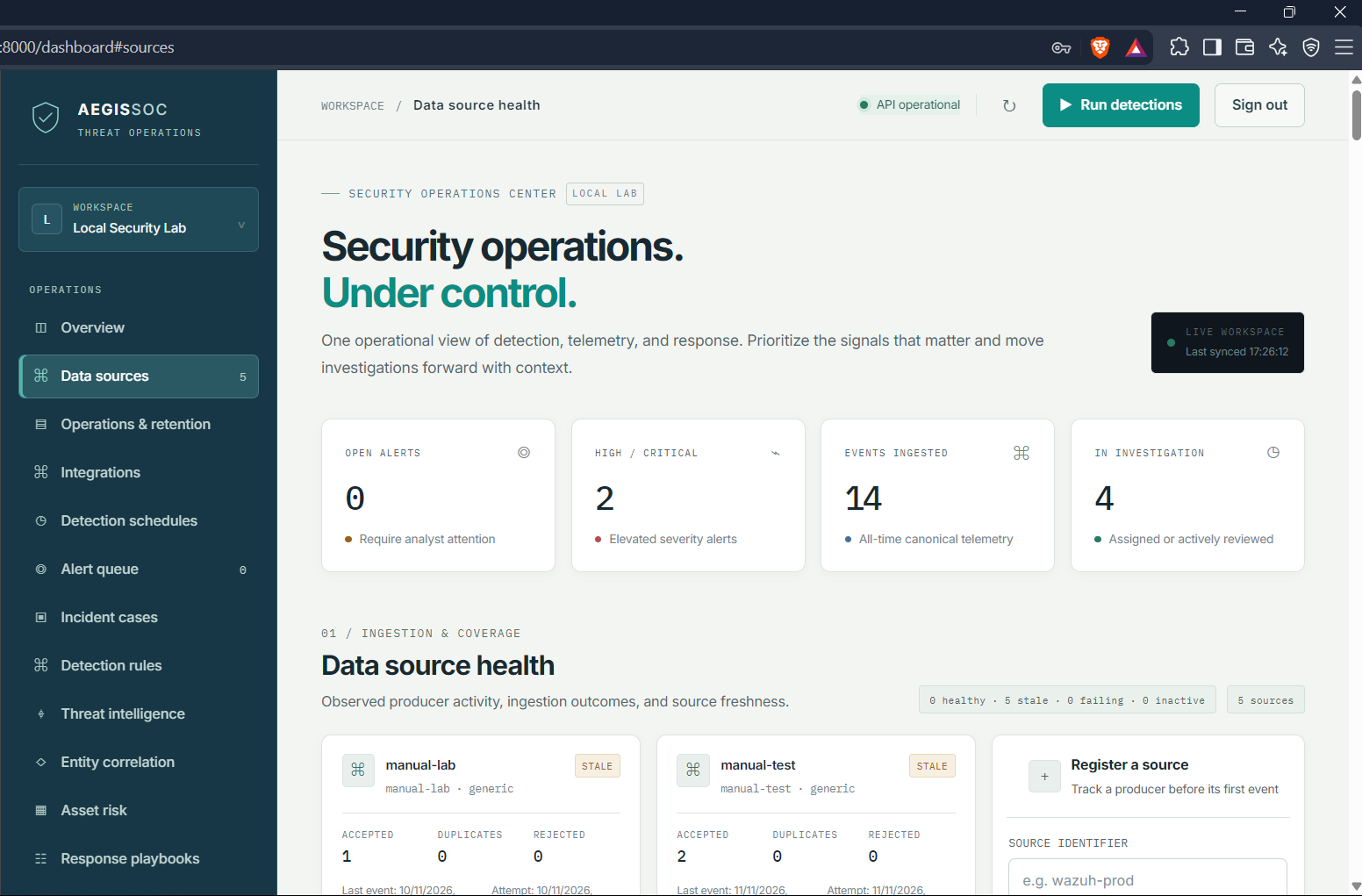
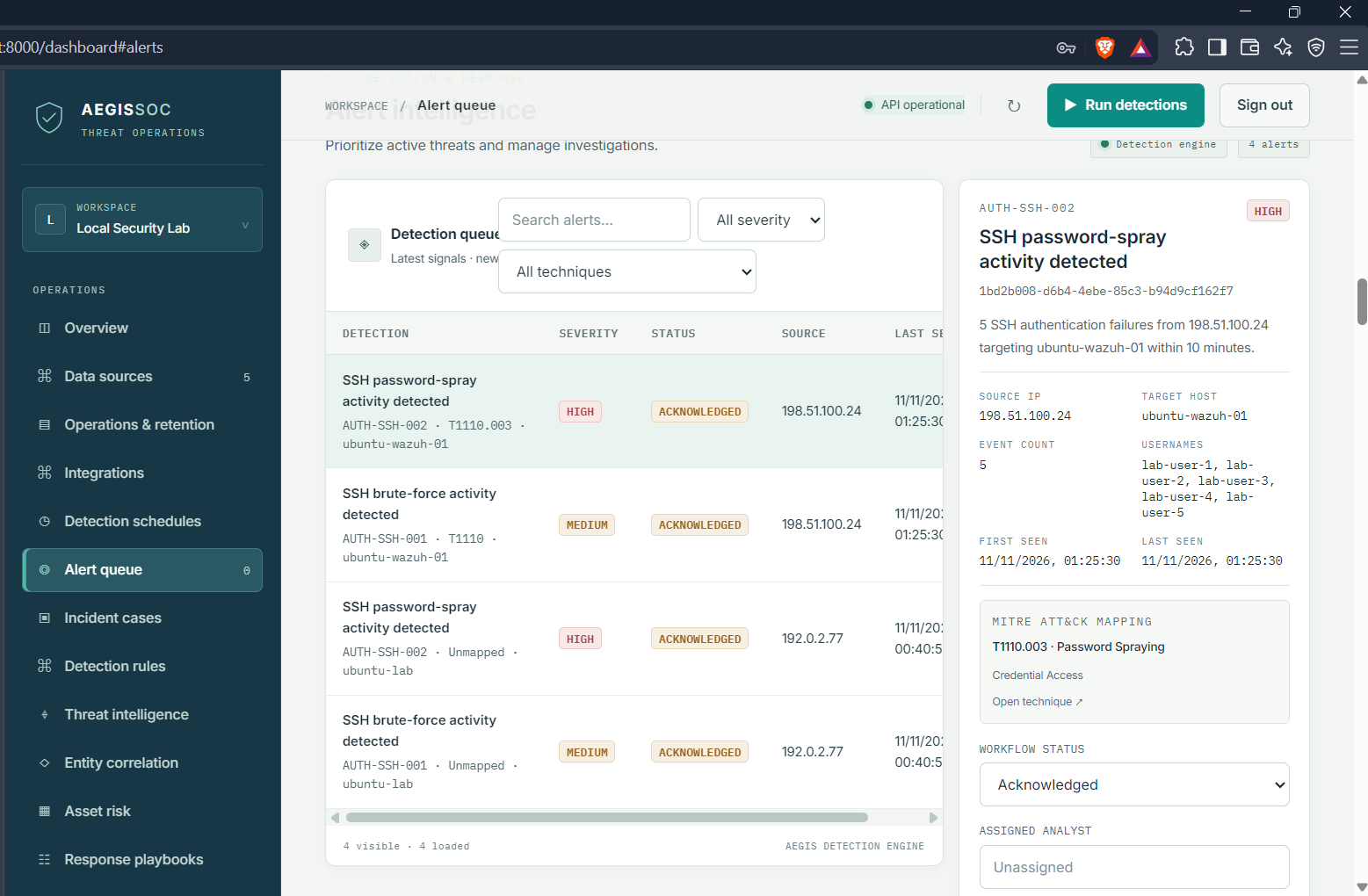
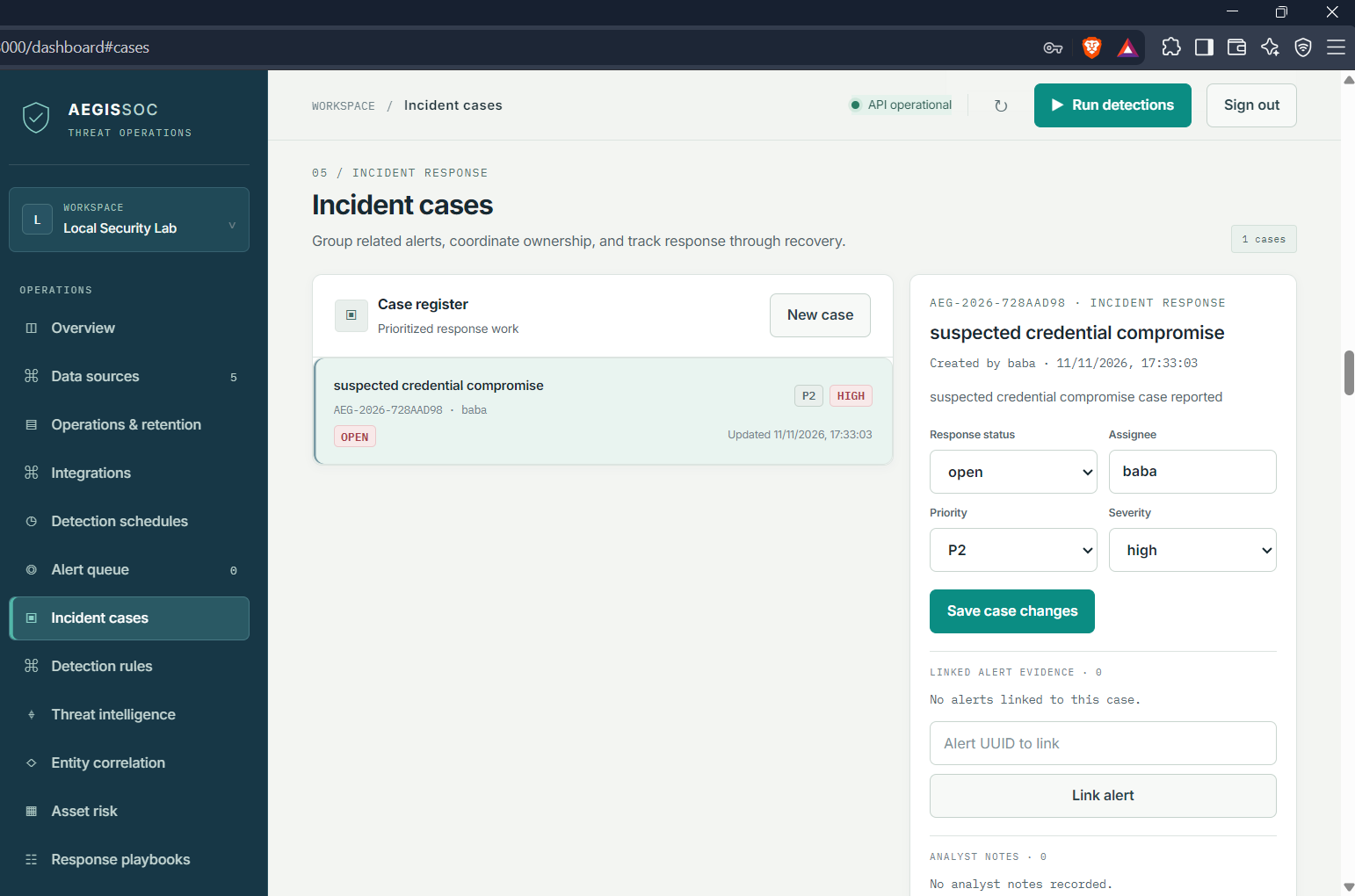
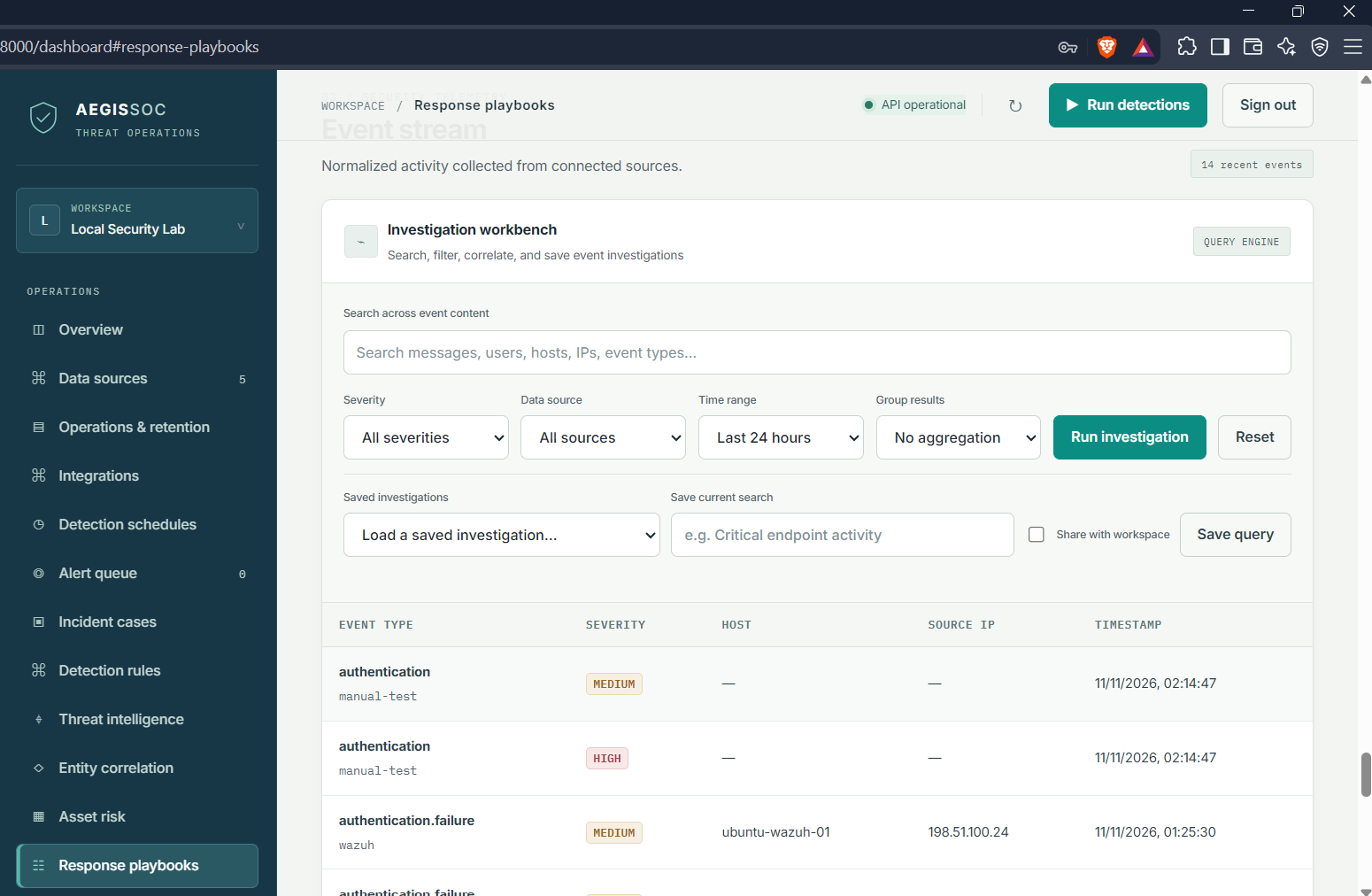
THE BUILDOriginal project captures and walkthrough media. Each item is labelled to explain what it demonstrates.
These seven genuine dashboard captures are from an earlier lab build. The AegisSOC screenshot gallery states that they do not represent the latest dashboard fixes; fresh captures from the current local build are still required before treating them as release evidence.
 Open full size
 Open full size
 Open full size
 Open full size
 Open full size
 Open full size
 Open full size
10 / ENGINEERING NOTES
TRANSPARENCYClear boundaries matter. These notes describe what the current project does—and what it does not claim to do.