Make the JSON inventory the expected-state contract
A single structured inventory lets validation happen before probes run and makes topology assumptions reviewable in version control.
ENGINEERING PROJECT / 03
A repeatable GNS3 network operations lab that validates a structured inventory, checks endpoint reachability and records monitoring results as JSON evidence.
01 / CONTEXT
THE WHYNetwork labs can be difficult to verify consistently when device inventories and reachability checks are performed manually. NetOps Sentinel pairs a documented multi-router topology with a read-only validation workflow and structured evidence.
02 / SYSTEM DESIGN
THE STRUCTUREA high-level view of the documented workflow and component boundaries.
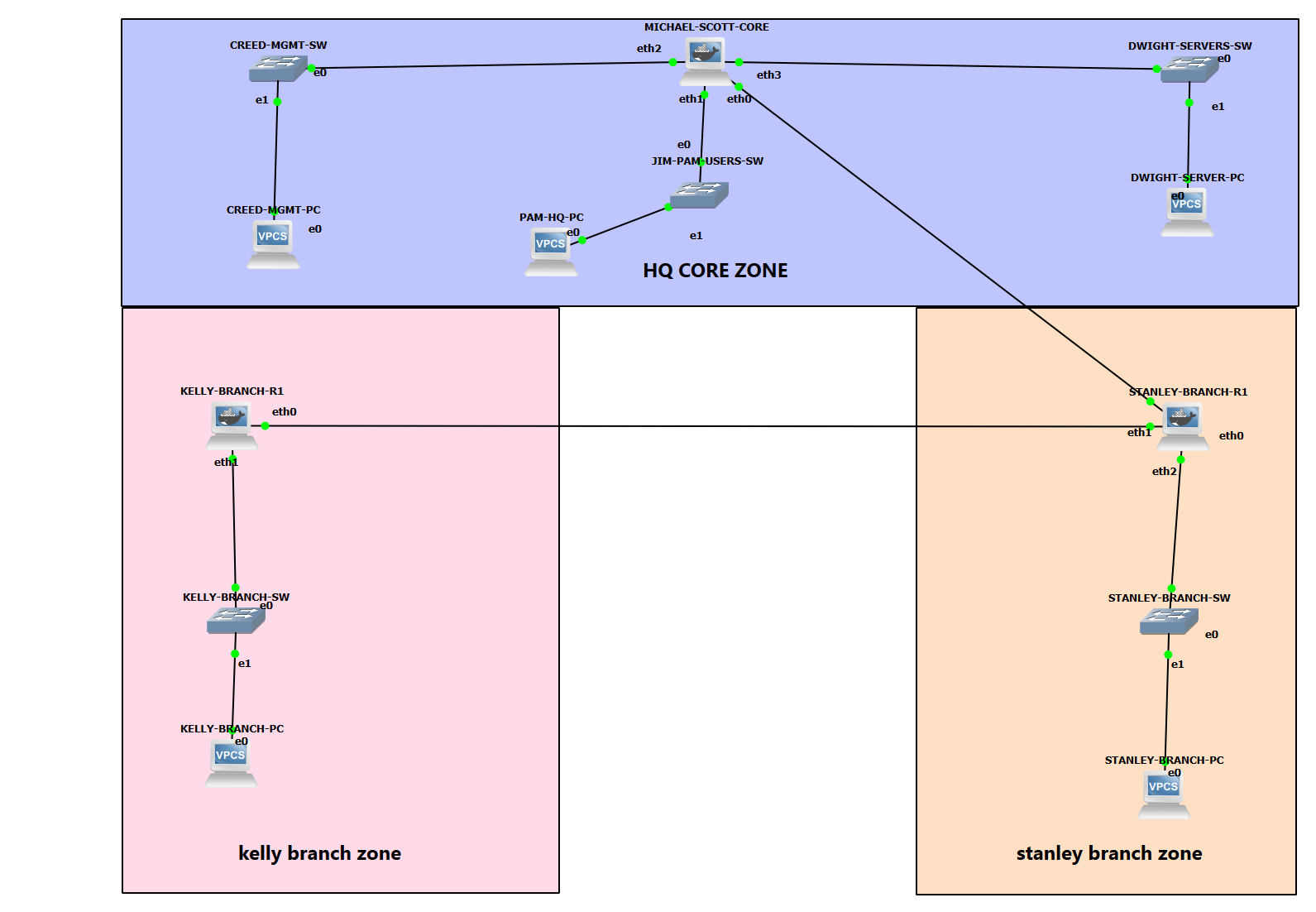
Three FRRouting routers connect five switches, five LANs and two point-to-point transit networks.
Describes devices, networks, endpoints, interfaces and routing intent.
Checks expected inventory data and addressing before monitoring.
Uses the system ping utility with Linux and Windows probe support.
Records monitoring results for later review and comparison.
03 / ENGINEERING LOG
THE BUILD SEQUENCEA transparent sequence of engineering milestones. Status labels describe documented work—not a live completion percentage.
Documented a topology with three FRRouting routers, five switches, five LANs and two point-to-point transit networks.
Created a JSON inventory and recorded validation for 8 devices, 7 networks, 5 endpoints and 4 interfaces.
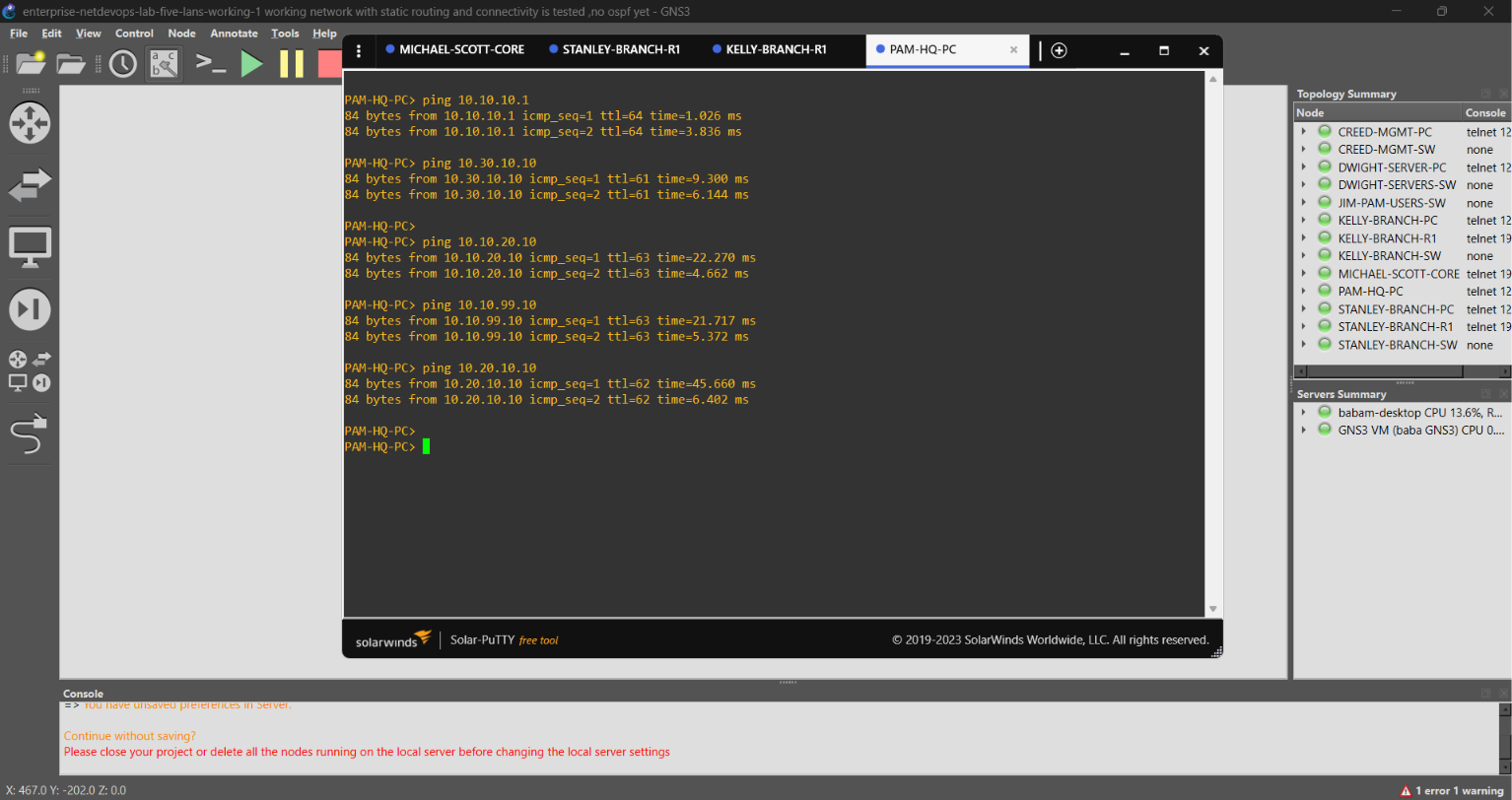
Added platform-aware ICMP probes and recorded a baseline in which five HQ test destinations responded.
Stored monitoring results as JSON evidence. The repository records seven passing unit tests for inventory, endpoint loading, probes and timeouts.
The recorded evidence describes a prior GNS3 run, not live device health. Re-run the checks against the current lab before treating the baseline as current.
04 / DESIGN JUDGMENT
TRADE-OFFS & REASONSThe engineering choices that shape the system—and the reason each boundary exists.
A single structured inventory lets validation happen before probes run and makes topology assumptions reviewable in version control.
ICMP checks provide a low-impact reachability baseline without changing the GNS3 devices or claiming application-level health.
Structured JSON output supports comparison between runs and makes it possible to trace a reported result back to a specific lab execution.
06 / IMPLEMENTATION
THE HOWThe work is broken into practical building blocks, from initial design through to validation.
Models the network with three FRRouting routers, five switches, five LANs and two transit networks.
Defines an expected inventory of devices, networks, endpoints and interfaces in JSON.
Validates inventory structure and addressing before probing endpoints.
Runs read-only ICMP reachability checks with platform-aware probe support.
Records structured JSON output so monitoring runs can be reviewed and compared.
07 / VERIFICATION
THE CHECKSSpecific checks documented for this project. Results are scoped to the recorded lab or test run.
The documented baseline checked 8 devices, 7 networks, 5 endpoints and 4 interfaces.
The README records a run of seven unit tests covering inventory, endpoint loading, probes and timeouts.
The recorded HQ endpoint test reached its gateway, server, management and two branch endpoints.
08 / RESULTS
THE VALUEA repeatable validation workflow rather than a one-off topology diagram.
A documented GNS3 baseline spanning headquarters and two branch networks.
Structured JSON outputs and automated tests that support troubleshooting and future automation.
09 / EVIDENCE
THE BUILDOriginal project captures and walkthrough media. Each item is labelled to explain what it demonstrates.
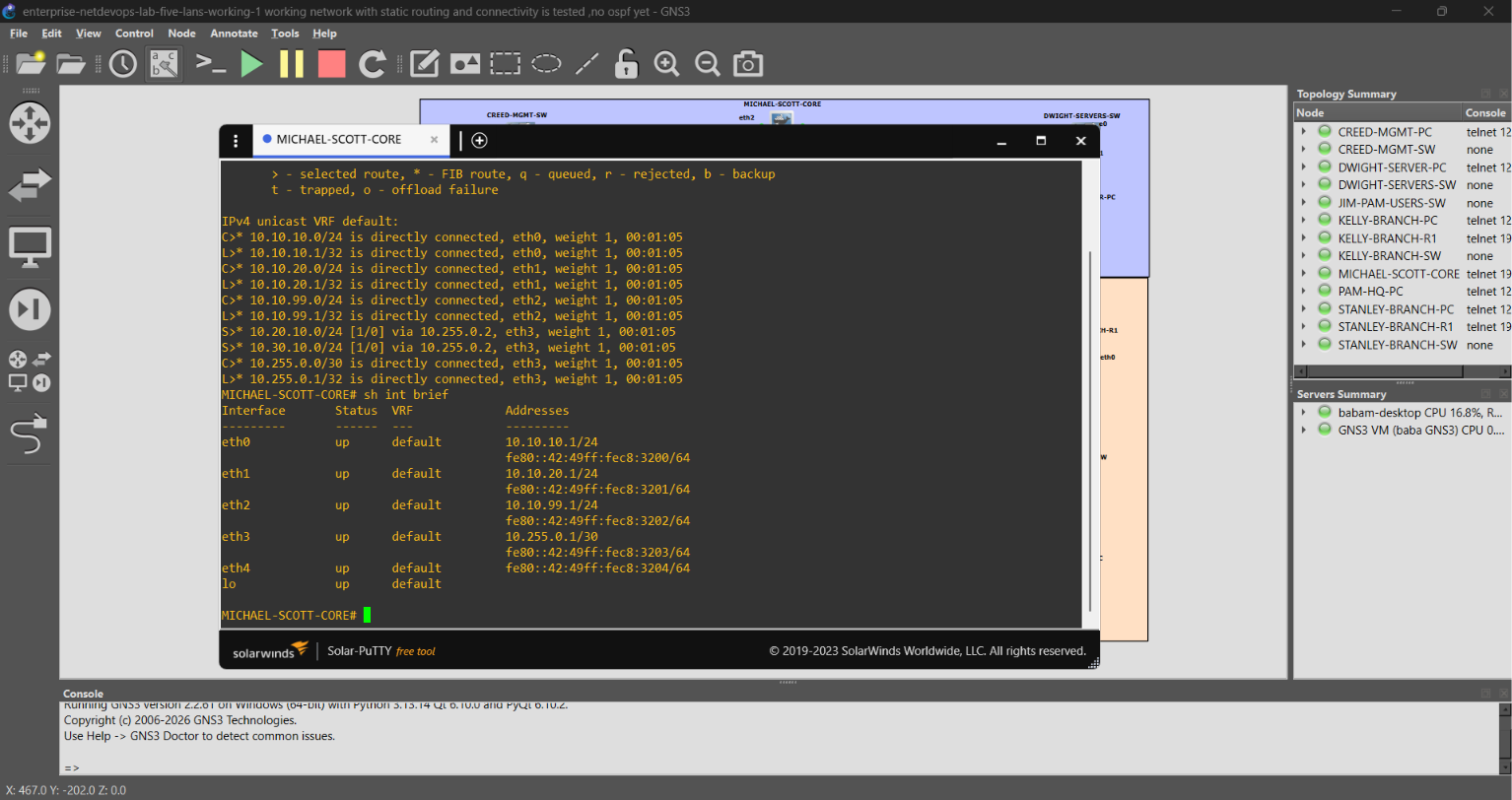
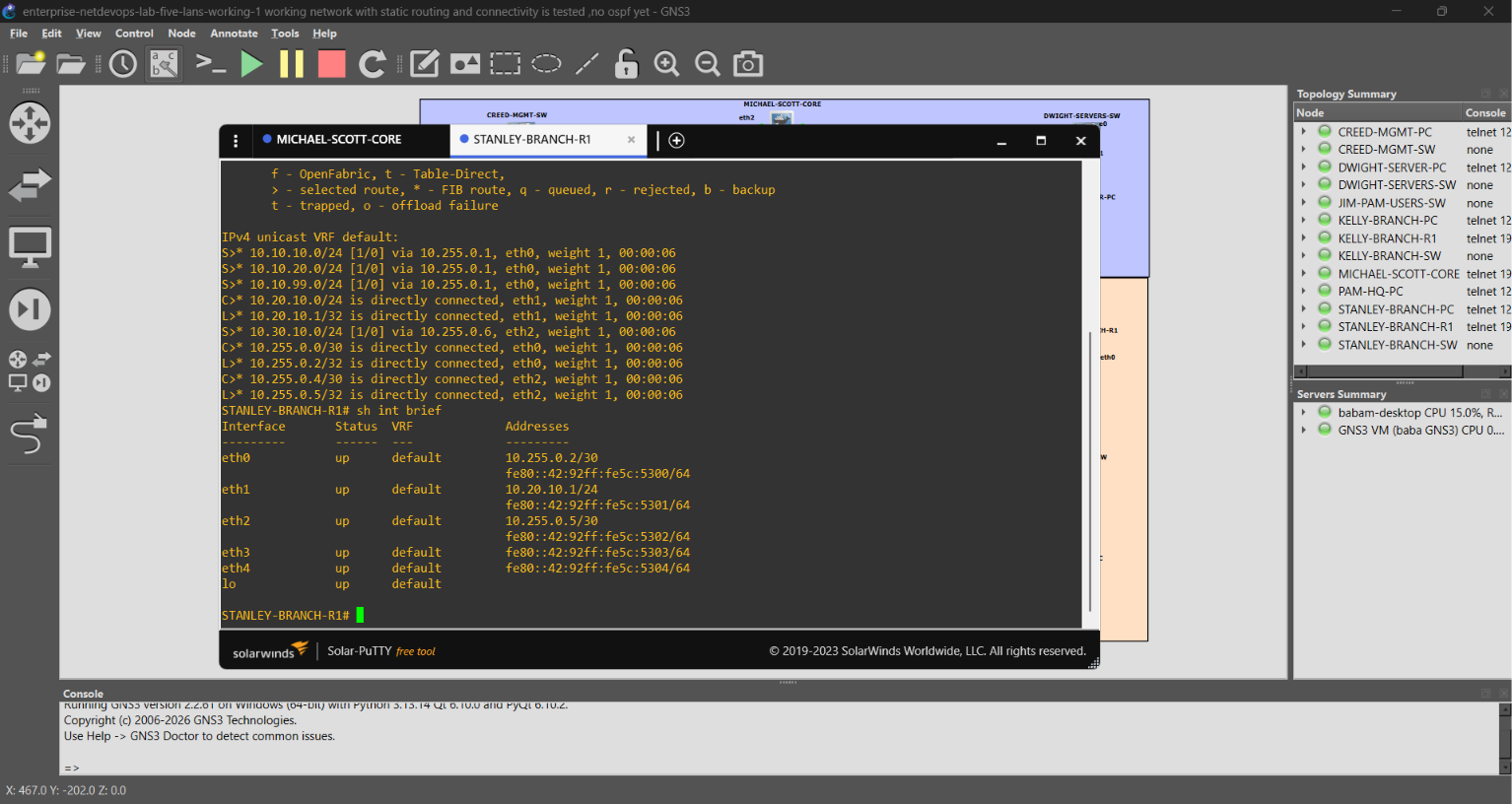
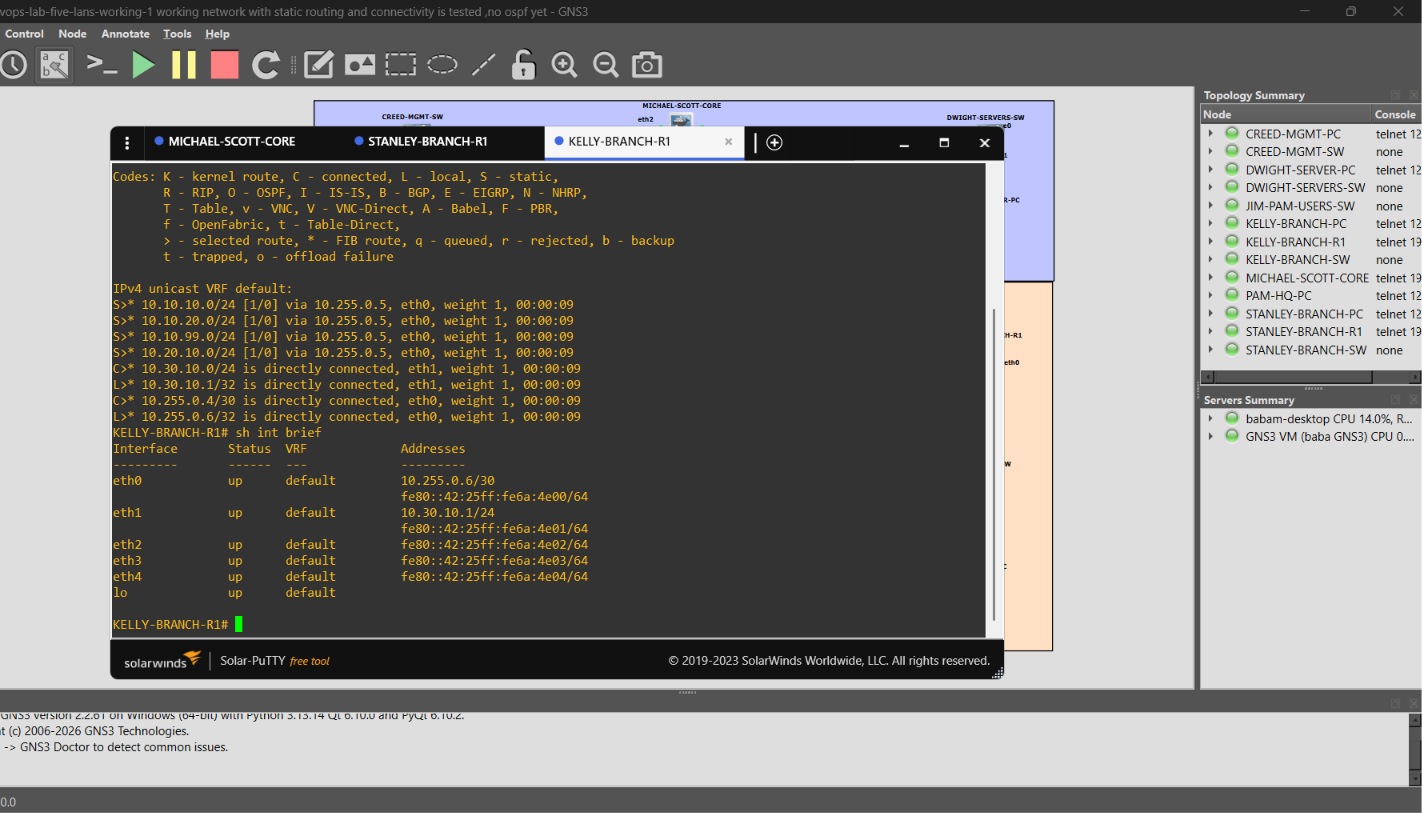
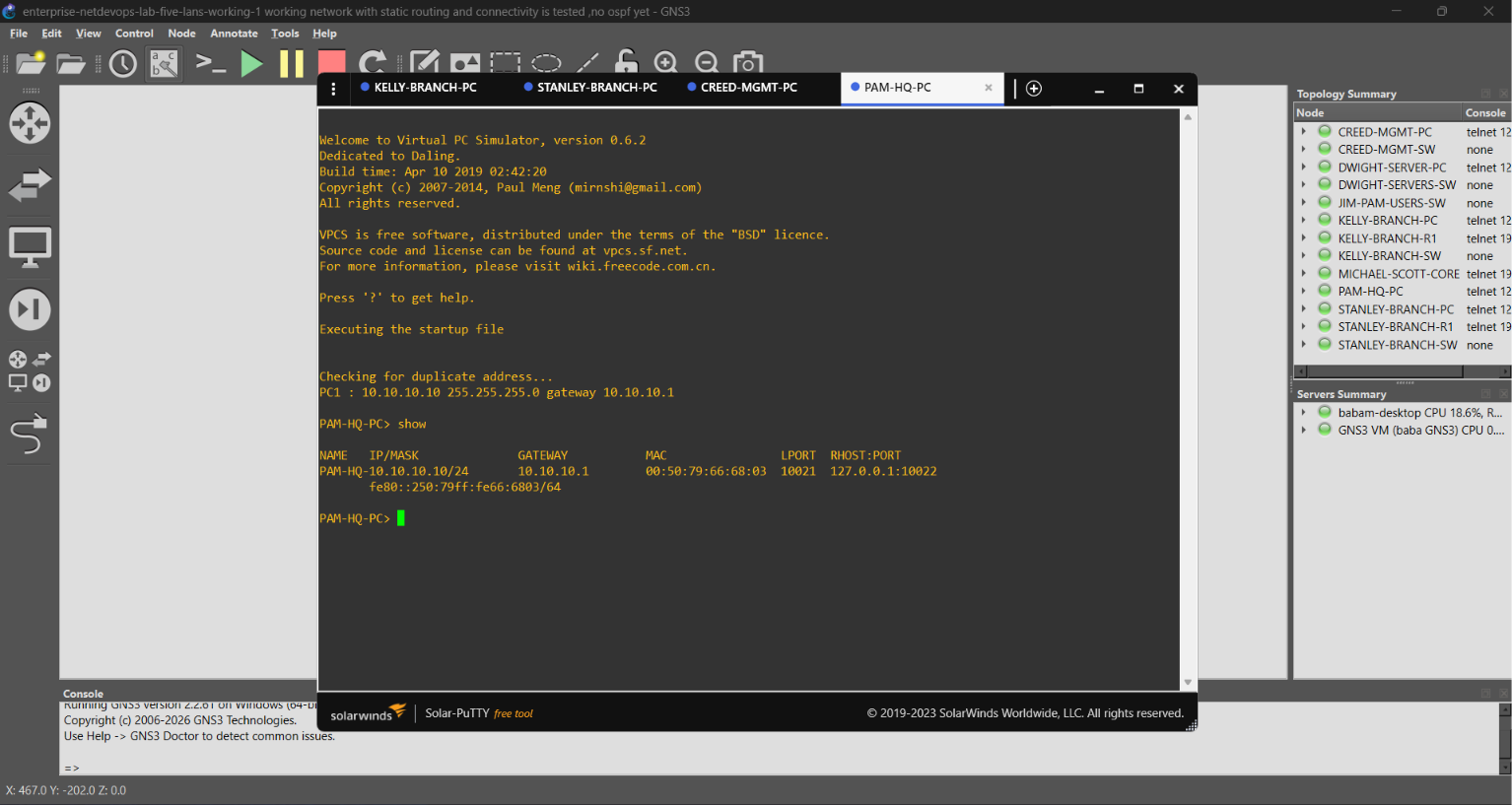
These are genuine captures from the documented GNS3 lab baseline. The evidence notes date the lab record to October 19, 2026; results describe that recorded test state, not current live device health.
 Open full size
 Open full size
 Open full size
 Open full size
 Open full size
 Open full size
10 / ENGINEERING NOTES
TRANSPARENCYClear boundaries matter. These notes describe what the current project does—and what it does not claim to do.